HOUSTON, TEXAS (Compiled by editors at Energy Analytics Institute, 4.Jan.2026, Words: 3,800) — US secretary of state Marco Rubio spoke with 3 separate US new agencies on 4 Jan. 2025 in the immediate aftermath of the capture of Venezuela’s leader Nicolàs Maduro. What follows are excerpts from his interviews with: George Stephanopoulos of ABC’s This Week, Kristen Welker of NBC’s Meet the Press, and Margaret Brennan of CBS’s Face the Nation.
Select excerpts from the 3 interviews follow:
THE VENEZUELAN PETROLEUM SECTOR
ABC: Let me ask you about oil. The President says the U.S. is taking over the oil. The question is, I guess, if the purpose of the operation was to capture Maduro and bring him to justice, why does the United States need to take over the Venezuelan oil industry?
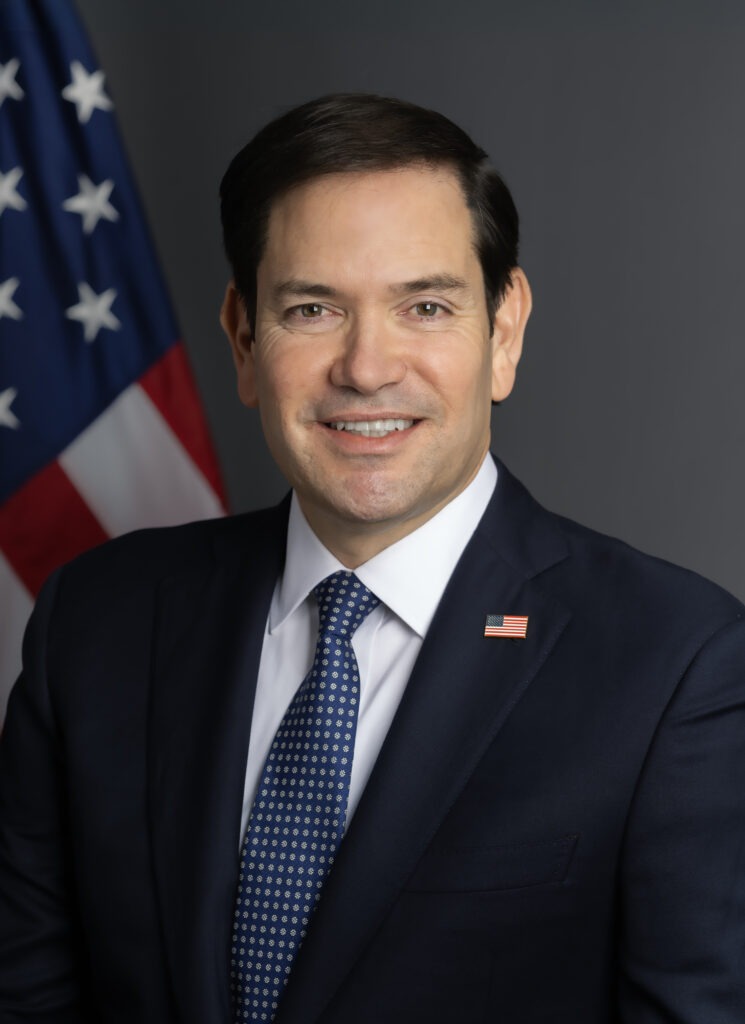
RUBIO: Well, we don’t need to. First of all, let me back up. We don’t need Venezuela’s oil. We have plenty of oil in the United States. What we’re not going to allow is for the oil industry in Venezuela to be controlled by adversaries of the United States. You have to understand – why does China need their oil? Why does Russia need their oil? Why does Iran need their oil? They’re not even in this continent. This is the Western Hemisphere. This is where we live, and we’re not going to allow the Western Hemisphere to be a base of operation for adversaries, competitors, and rivals of the United States. It’s as simple as that.
You cannot continue to have the largest oil reserves in the world under the control of adversaries of the United States, not benefiting the people of Venezuela and stolen by a handful of oligarchs around the world, including inside of Venezuela, but not benefitting the people of that country.
We’ve seen how our adversaries all over the world are exploiting and extracting resources from Africa, from every other continent. They’re not going to do it in the Western Hemisphere.
— Marco Rubio
RELATED: VENEZUELA’S DELCY RODRÍGUEZ COMMENTS ON MANAGEMENT OF VENEZUELA’S ENERGY RESOURCES
ABC: But how does the United States intend to secure the oilfields? Won’t that take U.S. troops?
RUBIO: Well, ultimately this is not about securing the oilfields. This is about ensuring that no sanctioned oil can come in and out until they make changes to the governance of that entire industry. Because right now that industry is nonexistent in the traditional way. These oilfields basically are pirate operations. People literally steal the oil from the ground, a handful of – that’s how they hold this regime together. A handful of cronies benefit from this – specific oil wells, they’re producing at, like, 18 percent capacity because the equipment is all decrepit, and they basically pocket the money to their benefit. They sell the oil at a discount on global markets – 40 cents on the dollar, 50 cents on the dollar. But all that money goes to them. Those oilfields have not benefited the people of Venezuela in over a decade. They have – but they have made multimillionaires – billionaires – out of just a handful of people. And that’s what’s held this regime together. That’s what needs to be addressed.
The way to address it to the benefit of the Venezuelan people is to get private companies that are not from Iran or somewhere else to go in, invest in the equipment that hasn’t been invested in in 20 years because none of the profits that have been made from the oil have been reinvested – it’s all been stolen – and that’s going to take outside companies that come in and know how to do that. That – the people who do this stuff will know how to do it. But it all begins with dramatic changes at the way the – on the way that the authorities that are in charge of that industry behave. And until those changes happen, this quarantine will remain in place.
RELATED: MEXICO’S PRESIDENT CLAUDIA SHEINBAUM’S STATEMENT REGARDING MADURO’S CAPTURE
ABC: Chevron is the only American company working in Venezuela right now, the only American oil company working in Venezuela right now. Have you gotten commitments from any other U.S. oil companies to go in?
RUBIO: I haven’t spoken to U.S. oil companies in the last few days, but we’re pretty certain that there will be dramatic interest from Western companies. Non-Russian, non-Chinese companies will be very interested. Our refineries in the Gulf Coast of the United States are the best in terms of refining this heavy crude, and there’s actually been a shortage of heavy crude around the world, so I think there would be tremendous demand and interest from private industry if given the space to do it, if given the opportunity to do it.
And that will spin off tremendous royalties for the people of Venezuela to benefit the people of that country, not the handful of people at the top but the people. And that can happen. There will be interest. I haven’t spoken to the companies since all this has happened. I’m certainly aware of who they are. And I have spoken to Secretary Wright and Secretary Burgum and others on – and I know they’ll soon be sort of taking an assessment and speaking to some of these companies. But I don’t have any concerns that there won’t be interest. There’ll be tremendous interest if it can be done the right way.
CBS: The President used the word “oil” 20 times in his press conference. You talked about these tremendous oil assets that Venezuela have – has. But the President’s last envoy to Venezuela, Elliott Abrams, is publicly arguing that you know better than the policy you’re backing. He said, quote, “…Venezuelan plutocrats or U.S. oil executives [seem to be] coming to Mar-a-Lago and whispering about how easy life would be if we just made a deal with the regime once Maduro was gone?” Is that what happened here?
RELATED: TRUMP SAYS BIG OIL COMPANIES SET TO INVEST AT LEAST $100BN IN VENEZUELA
RUBIO: No, that’s not what happened here. What happened here is that we arrested a narcotrafficker who is now going to stand trial in the United States for the crimes he’s committed against our people for 15 years – and the person who helped him, of course, his wife, who was co-located with him, so she was arrested as well. That’s what happened here.
As far as oil, look, oil is critical not just to fueling economies all over the world. It’s critical to Venezuela’s future. Their oil industry is completely destroyed. It’s destroyed. All those oilfields that used to produce a lot — and wealth for their country and their people, those things are decrepit. They’re bankrupt. They need to be reinvested in. It’s obvious. You – they do not have the capability to bring up that industry again. They need investment from private companies who are only going to invest under certain guarantees and conditions. That has to go to the benefit of the Venezuelan people. Right now, all of that wealth is stolen. It’s stolen and it goes into the hands of oligarchs around the world and the oligarchs inside of Venezuela. A handful of people benefit from it.
WHO’S RUNNING VENEZUELA, ELECTIONS
CBC: You spoke with Delcy Rodríguez, who is now, according to President Trump, sworn in as the president, as the leader of Venezuela. Did she promise you that she is expelling all of those American adversaries from Venezuelan territory? What exactly did she agree to do when she spoke to you?
RUBIO: We are going to – our objectives when it comes to how Venezuela impacts the national interest of the United States have not changed, and we want those addressed. We want drug trafficking to stop. We want no more gang members to come our way. We don’t want to see the Iranian – and, by the way, Cuban – presence of the past. We want the oil industry in that country not to go to the benefit of pirates and adversaries of the United States but for the benefit of the people. We want to see all of that happen. We insist on seeing that happen.
RELATED: CHEVRON, SHELL, REPSOL AND ENI TO IMMEDIATELY BOOST INVESTMENTS IN VENEZUELA
CBS: Did she promise that?
RUBIO: And we are going to work to continue to see that happen. Well, right now, the – we are going to see what happens moving forward. Let me just say that. I’m not, obviously, going to have these conversations in the media. These are delicate and complicated things that require mature statesmanship, and that’s what we intend to do. But our goals remain the same. The difference is that the person who was in charge, even though not legitimately, in the past was someone you could not work with.
CBS: Right, but is there an agreement to transition to democracy? It sounds like there’s not.
RUBIO: I think what the President point out is the obvious. Well, I think what the point – but there has to be a little realism here, okay? A transition to the – they’ve had this regime, they’ve had this system of chavismo in place for 15 or 16 years. And everyone’s asking why, 24 hours after Nicolás Maduro was arrested, there isn’t an election scheduled for tomorrow. That’s absurd.
ABC: President Trump was pretty clear yesterday. He said the United States is going to run Venezuela. Under what legal authority?
RUBIO: Under – well, first of all, what’s going to happen here is that we have a quarantine on their oil. That means their economy will not be able to move forward until the conditions that are in the national interest of the United States and the interests of the Venezuelan people are met. And that’s what we intend to do. So that leverage remains, that leverage is ongoing, and we expect that it’s going to lead to results here. We’re hope so – hopeful that it does – positive results for the people of Venezuela, but ultimately, most importantly, for us in the national interest of the United States.
RELATED ANALYSIS: VENEZUELA’S 55,000 KM2 ORINOCO BELT OR FAJA
We will no longer have – hopefully, as we move forward here, we’ll set the conditions so that we no longer have in our hemisphere a Venezuela that’s the crossroads for many of our adversaries around the world, including Iran and Hizballah, is no longer sending us drug gangs, is no longer sending us drug boats, is no longer a narcotrafficking paradise for all those drugs coming out of Colombia to go in through the Caribbean and towards the United States. And obviously we want a better future for the people of Venezuela. We want them to have an oil industry where the wealth is – goes to the people, not to a handful of corrupt individuals and stolen by pirates all over the world. That’s what we’re working towards, and we intend to use the leverage we have to help achieve that.
ABC: Let me ask the question again: What is the legal authority for the United States to be running Venezuela?
RUBIO: Well, I explained to you what our goals are and how we’re going to use the leverage to make it happen. As far as what our legal authority is on the quarantine, very simple: We have court orders. These are sanctioned boats, and we get orders from courts to go after and seize these sanctions. So they’re – that’s – I don’t know, is a court not a legal authority?
RELATD ANALYSIS: THE INSIGNIFICANCE OF VENEZUELA’S 930 R/P RATIO OR 930 YEAR RESERVE LIFE INDEX
ABC: So is the United States running Venezuela right now?
RUBIO: Well, I’ve explained once again; I’ll do it one more time. What we are running is the direction that this is going to move moving forward, and that is we have leverage. This leverage we are using and we intend to use – we started using already. You can see where they are running out of storage capacity. In a few weeks they’re going to have to start pumping oil unless they make changes. And that leverage that we have with the armada of boats that are currently positioned allow us to seize any sanctioned boats coming into or out of Venezuela loaded with oil or on its way in to pick up oil, and we can pick and choose which ones we go after. We have court orders for each one. That will continue to be in place until the people who have control over the levers of power in that country make changes that are not just in the interest of the people of Venezuela but are in the interest of the United States and the things that we care about. That’s what we intend to do.
NBC: Mr. Secretary, who is in charge? Are you running Venezuela right now?
RUBIO: Yeah, I mean, I keep people fixating on that. Here’s the bottom line on it, is we expect to see changes in Venezuela, changes of all kinds – long term, short term. We’d love to see all kinds of changes. But the most immediate changes are the ones that are in the national interest of the United States. That’s why we’re involved here, because of how it applies and has a direct impact on the United States, okay? We are not going to be able to allow in our hemisphere a country that becomes a crossroads for the activities of all of our adversaries around the world. We just can’t allow it. We can’t have a country where the people in charge of its military and in charge of its police department are openly cooperating with drug trafficking organizations. We can’t – we’re not going to allow that. These are – these things are direct threats to the United States, and we intend to use every element of leverage that we have to ensure that that changes.
The one I would point everyone to is that our military is helping the Coast Guard conduct a law enforcement function, which is not just the capture of Maduro, but the enforcement of our sanctions. We go to court, we get a warrant, we seize the boats. And we think this is tremendous leverage – incredible, crippling leverage – which we intend to continue to use until we see the changes that we need to see that are a benefit to the American people – and by the way, we believe to the people of Venezuela as well.
RELATED: VENEZUELA’S MEREY AVERAGED $56.68/BBL IN 2025, DOWN 13.6% V 2024, OPEC SAYS
NBC: And are you involved in that transition, Secretary?
RUBIO: And so obviously I’m very involved in this. Well, of – I mean, I think everyone knows I’m pretty involved on politics in this hemisphere, obviously as Secretary of State and National Security Advisor very involved in all of these elements. The Department of War plays a very important role here along with the Department of Justice, for example, because they’ve got – they’re the ones that have to go to court.
So this is a team effort by the entire national security apparatus of our country. But it is running this policy, and the goal of the policy is to see changes in Venezuela that are beneficial to the United States first and foremost – because that’s who we work for – but also, we believe, beneficial for the people of Venezuela who have suffered tremendously. We want a better future for Venezuela, and we think a better future for the people of Venezuela also is stabilizing for the region and makes the neighborhood we live in a much better and safer place.
NBC: President Trump said the administration is working with Maduro’s vice president, Delcy Rogríguez. Why does the administration oppose working with the opposition leader, María Corina Machado? She’s the Nobel Peace Prize winner, of course, as well. Her coalition has the support of 70 percent of Venezuelans. Why not work with her?
SECRETARY RUBIO: Well, a couple of things. First of all, María Corina Machado is fantastic and she’s someone I’ve known for a very long time, and she – that whole movement is. But here’s the – we are dealing with the immediate reality. The immediate reality is that, unfortunately – and sadly – but unfortunately, the vast majority of the opposition is no longer present inside of Venezuela. We have short-term things that have to be addressed right away. We all wish to see a bright future for Venezuela, a transition to democracy. All of these things are great and we all want to see that. I have worked on that for 15 years on a personal level, both in the Senate and now as National Security Advisor and Secretary of State. These are things I still care about, we still care about.
But what we’re talking about is what happens over the next two, three weeks, two, three months, and how that ties to the national interest of the United States. And so we expect to see more compliance and cooperation than we were previously receiving.
With Nicolás Maduro you could not make a deal or an arrangement, although he, by the way, was given very generous offers. He could have left Venezuela as recently as a week and a half ago. There were opportunities available for him to avoid all of this, because he’s not someone we can work with. He suckered the Biden administration into stupid deals. He’s made a career out of not keeping deals and figuring out how to save himself by buying time. And we were not – President Trump was not going to fall into that trap.
So now there are other people in charge of the military and police apparatus there. They’re going to have to decide now what direction they want to go, and we hope they will choose a different direction than the one Nicolás Maduro picked. Ultimately, we hope this leads to a holistic transition all the way around in Venezuela – societal, political, all of that. We’re in favor of all of that. But right now we have to take the first steps, and the first steps are securing what’s in the national interest of the United States and also beneficial to the people of Venezuela, and those are the things that we’re focused on right now. No more drug trafficking, no more Iran/Hizballah presence there — and no more using the oil industry to enrich all our adversaries around the world and not benefiting the people of Venezuela or, frankly, benefiting the United States and the region.
NBC: You talk about a holistic transition. I think there’s a lot of focus on potential elections. How soon will elections be held? Within 30 days, Mr. Secretary?
RUBIO: Elections? Oh, look, the – this is a country that’s been governed by this regime now for 14 or 15 years. The elections should have happened a long time ago. The elections did happen, they lost them, and they didn’t count the votes or they refused to count the votes, and everyone knows it. So look, all of that I think is premature at this point. There’s a lot of work to be done here. Right now what we are focused in – let’s be realistic here. What we are focused on right now is all of the problems we had with the – when Maduro was there, we still have those problems in terms of them needing to be addressed. We are going to give people an opportunity to address those challenges and those problems.
Until they address it, they will continue to face this oil quarantine, they will continue to face pressure from the United States. We will continue to target drug boats if they try to run towards the United States. We will continue to seize the boats that are sanctioned with court orders. We will continue to do that and potentially other things until the things we need to see addressed are addressed. Because ultimately, above everything else – we care about elections, we care about democracy, we care about all of that, but the number one thing we care about is the safety, security, well-being, and prosperity of the United States.
NBC: Is the Cuban Government the Trump Administration’s next target, Mr. Secretary? Very quickly.
RUBIO: Well, the Cuban Government is a huge problem. Yeah, the Cuban Government is a huge problem, first of all, for the people of Cuba.
ABC: So is it your position now that the vice president, Delcy Rodríguez, is now the legitimate president of Venezuela?
RUBIO: Well, this is not about the legitimate president. We don’t – we don’t believe that this regime in place is legitimate via an election, and that’s not just us. It’s 60-something countries around the world that have taken that view as well, including the European Union. But we understand that they are – there are people in Venezuela today who are the ones that can actually make changes. So for example, when we want to send in the migrant flights, even though we’ve never recognized the Maduro regime as legitimate, we had to deal with the authorities that controlled the airport. We had to deal with the people who had guns and the people who had control of the airports. We had to deal with them to achieve these objectives. That’s different from recognizing their legitimacy.
Ultimately, legitimacy for their system of government will come about through a period of transition and real elections, which they have not had. And by the way, it’s the reason why Maduro was – is not just an indicted drug – an indicted drug trafficker, he’s – illegitimate president. He was not the head of state. And I continue to see these media reports referring to him as “President Maduro” and “the head of state.” He was not the head of state. He was not the head – and it’s not just us saying it; the Biden administration said it, and so did – 60-something countries around the world hold that position.
ABC: The President said that you spoke with the vice president, Rodríguez, and that she promised to do whatever the United States needs. But in her televised statement, she was pretty defiant, saying that Maduro is still president and that the Venezuelan people will no longer be slaves or the “colony of [an] empire.” That’s a quote. What exactly did she say to you, and what comes next?
RUBIO: Well, we’re not going to judge moving forward based simply on what’s said in press conferences. We want to see action here at the end of the day. Rhetoric is one thing. You see rhetoric for a lot of different reasons. There’s a lot of different reasons why people go on TV and say certain things in these countries, especially 15 hours or 12 hours after the person who used to be in charge of the regime is now in handcuffs and on his way to New York.
So what I will say is, moving forward, it’s very simple. We’re not going to be reactive here to statements at press conferences or what people say in a certain interview or what some media post – some media post somewhere.
____________________
By compiled by editors at Energy Analytics Institute.