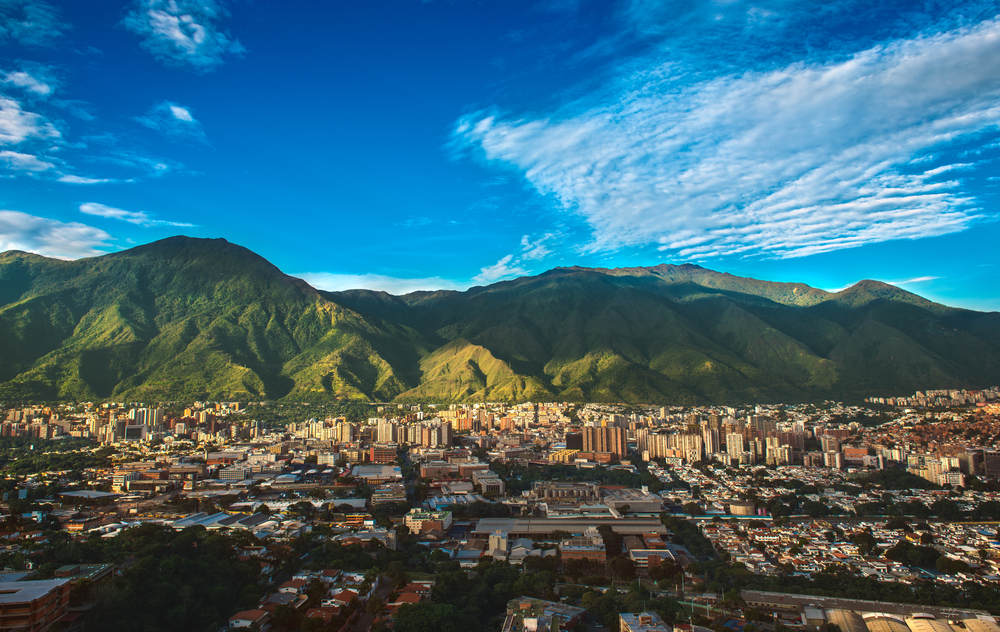
CARACAS, VENEZUELA (By Juan Salvador Pérez, guest contributor to Energy Analytics Institute, 30.Mar.2026, Words: 575) — The events of Jan. 2026 have opened a window of opportunity that just months ago seemed closed. Economic optimism is palpable in the projections and at the new business meetings.

However, as a society, we face an urgent question: are we thinking about building a country or are we simply reactivating a market?
ANALYSIS: WHY $100/BBL OIL HAPPENED ANYWAY
Economic growth, in and of itself, is a technical indicator. Progress, on the other hand, is an ethical imperative. If we do not tear down the structural walls that persist today, we run the risk of creating a bubble of prosperity for a few on a foundation of fragility for many. These are, in my opinion, the 3 walls we must question:
1. The wall of integrity: business or complicity? From an ethical perspective, there is no healthy growth on swampy ground. Corruption is not just the misappropriation of funds; it is the erosion of trust.
The dilemma: if the “new dynamism” continues to depend on the same vices, influence peddling, and opacity, we are not facing progress, but rather a mutation of the same problems. Ethics must cease to be an “extra” and become the basic infrastructure of any transaction.
RELATED: PEMEX BOOSTS CAPABILITIES THROUGH JOINT DEVELOPMENT CONTRACTS
2. The wall of social justice: the debt with a human face. A nation is measured by how it treats its most vulnerable citizens. Today, Venezuela presents a painful asymmetry: while some sectors are taking off, our retirees, pensioners, teachers, and public servants remain anchored in a reality of subsistence.
The challenge: growth cannot be exponential if inequality is also exponential. A country where technical talent and life experience (our senior citizens) are not economically valued is a country with a “moral liability” that sooner or later will hinder development.
RELATED: VENEZUELA EYES THERMAL DRONES TO PROTECT ELECTRIC INFRASTRUCTURE
3. The wall of physical capacity: the limit of industry. We cannot ignore the material reality. Our industrial infrastructure is not just a set of machines; it is the engine of labor dignity. Operating at half capacity with intermittent basic services is not “resilience,” it’s a physical limitation on human potential. Rebuilding the public sector is the sine qua non for the success of the private sector.
Certainly, 2026 presents us with an unexpected and unique opportunity, but success will not be automatic or free of obstacles. True transformation will not come from the figures of consulting firms and oil companies, but from our capacity to rebuild the work ethic, distributive justice, and institutional transparency.
Are we willing to sacrifice the speed of growth for the solidity of progress?
ANALYSIS: PEMEX–PETROBRAS OFFSHORE COOPERATION IN MEXICO … STRATEGIC LOGIC, REAL CONSTRAINTS
____________________
By Juan Salvador Pérez writing from Caracas. First published on 17 Feb. 2026 on social media. Translation by Energy Analytics Institute.
ABOUT THE AUTHOR
Juan Salvador Pérez is a lawyer from Andrés Bello Catholic University and holds a master’s degree in political and governmental studies. He has a distinguished career as a strategic communications consultant for prominent public figures and politicians. He has worked in both the public and private sectors (i.e. Total Venezuela). In 2018, he served as executive director of the National Investment Promotion Commission (CONAPRI). He contributes as a columnist to various Venezuelan publications, is a member of the editorial board of SIC Magazine, and is currently the director of strategic communications at Relatio, a political and corporate communications agency.