VANCOUVER, BRITISH COLUMBIA (By New Pacific, 3.Dec.2025, Words: 974) — New Pacific Metals Corp. reported positive progress at the Carangas silver-gold project and silver sand silver project in Bolivia – 2 of the largest undeveloped open-pitable silver projects in the world.
2025 marks a year of change for New Pacific as the company took a more proactive approach to move both projects towards production by working closely with the local communities, the regional mining industry groups, local and federal governments and as a result made significant progress at both the Carangas project and silver sand project. In addition, the newly elected Bolivian government has indicated that it is looking to encourage foreign investment to develop its mining industry. The company believes that all these factors will make 2026 very promising and productive.
CARANGAS SILVER-GOLD PROJECT UPDATE AND PATH FORWARD
Permitting and Community Agreement
In 2024, the company completed a Preliminary Economic Assessment (“PEA”) for the Carangas project. In 2025, our primary objectives for the Carangas project were to: 1) begin the process to convert its exploration licenses (“EPLs”) to administrative mining contracts (“AMCs”); and 2) formalize a framework agreement with the Carangas community.
In early 2025, the company submitted its application to convert the EPLs to AMCs to the Autoridad Jurisdictional Administrativa Minera in the Oruro Department (“AJAM Oruro”). Subsequently, AJAM Oruro completed its review of the application and gave the company permission to progress the conversion process, which is prior consultation with the community.
The company’s corporate social responsibility (“CSR”) team then initiated the prior consultation process with the Carangas community, including: socializing the economic, environmental, and social impacts of the Carangas project. As a result, in Aug. 2025, the Carangas community voted in favor of the company continuing with the remaining prior consultation process as well as authorizing the advancement of its other permitting and development activities.
In the fall of 2025, building on the success of the engagement process and the favorable community vote, at the community’s request, the company presented the community with a draft long-term framework agreement. This agreement sets out community benefits from permitting to the end of mine life. Negotiation is currently underway with the Carangas community to finalize the framework agreement.
Additionally, the company has built a constructive relationship with the Oruro department government to gain its support for the permit and development of the Carangas project. Upon execution of the framework agreement, we anticipate that the company and AJAM Oruro will be able to successfully complete the formal prior consultation process.
The next step would be to submit the EPLs to AMCs conversion application to the Plurinational Legislative Assembly of Bolivia (“National Assembly”) for final approval. Once the AMCs are obtained, the company anticipates that it will be able to carry out the environmental impact assessment study (“EEIA”) for the Carangas project.
Exploration and Infill Drilling
Between 2021 and 2023, the company conducted extensive exploration and resource definition drilling at the Carangas project, completing a total of 81,145 metres of diamond drilling in 189 holes. This work supported the release of the project’s inaugural mineral resource estimate (“MRE”) announced in Sep. 2023 and completion of the PEA in Sep. 2024.
The company is planning to commence work on a feasibility study, with infill drilling to upgrade the known resources. Additionally, the company plans to conduct exploration drilling – targeting deeper zones within the known wide intercepts of gold mineralization as well as new targets represented by the Induced Polarization (IP) anomalies. The 2026 drilling campaign is expected to comprise over 30,000m of drilling.
SILVER SAND SILVER PROJECT UPDATE AND PATH FORWARD
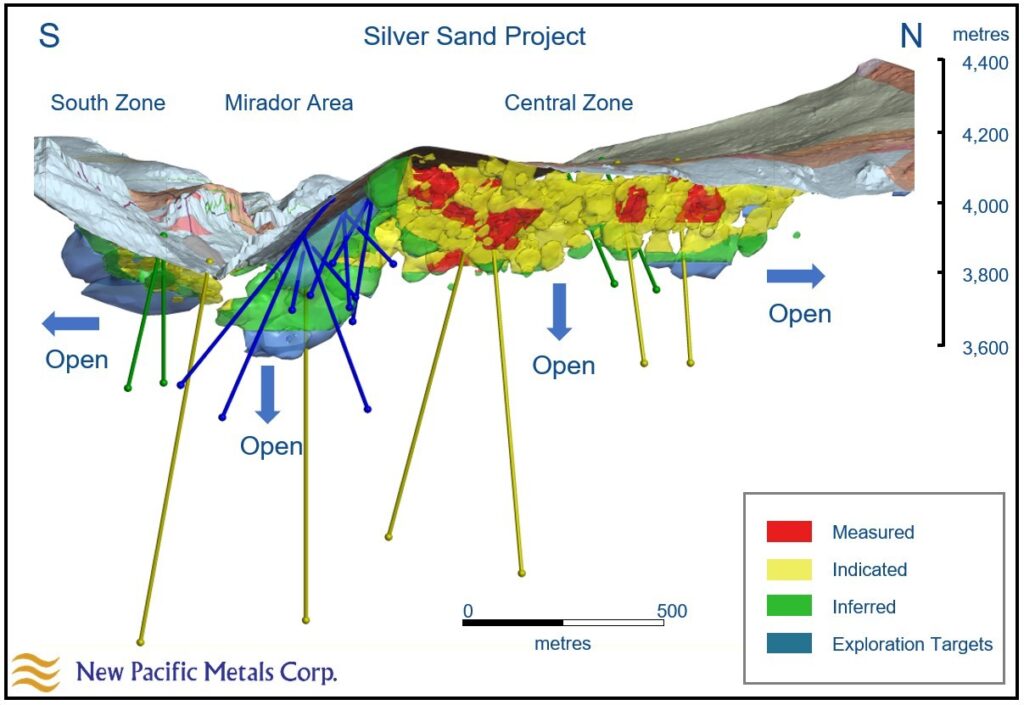
The Silver Sand Project received its environmental categorization in May 2023 which allowed the company to begin the EEIA process. However, the process was interrupted by illegal mining activities carried out by local artisanal and small-scale miners (“ASMs”) and the environmental categorization expired in Nov. 2024. Since 2023, the company focused its efforts on stopping the ASMs’ illegal mining activities. Significant progress was made in the first half of 2025. As of 1 Jul. 2025, the ASMs have withdrawn from the Silver Sand Project area and all illegal mining activities have stopped. The company has successfully regained access to the area and established a 24/7 on-site security presence and built a temporary camp. Preliminary results of the survey and inspection work on the ASMs’ illegal mining activities indicate a marginal impact on the overall economics of the Silver Sand project development.
Through a formal judicial resolution process in Bolivia, the Departmental Court of Justice of La Paz granted an amparo (a constitutional protection action), in Jun. 2025, in favour of the company. The Amparo provides the silver sand project with immediate and long-term protection against all forms of encroachment and illegal mining activity.
With the illegal mining activities stopped, the company has shifted its focus back to engaging the local communities to both rebuild the relationship and restore confidence in the project. Led in person by the CEO and the silver sand CSR team, the company has engaged the community directly impacted by the project in a door-to-door and family-to-family approach, with encouraging and positive results. The majority of the community members have been receptive to the company’s message and the benefits the project could bring to the region. In the remainder of 2025 and into early 2026, the company will focus on negotiating the framework and resettlement agreement with the community. The company plans to continue engaging with the four additional communities indirectly affected by the project.
Looking forward, the company’s goal is to complete the socialization process and sign framework agreements with the one immediately impacted community and four additional indirectly impacted communities by mid-2026. Following this, the company anticipates that it will be able to restart the environmental categorization and EEIA process.
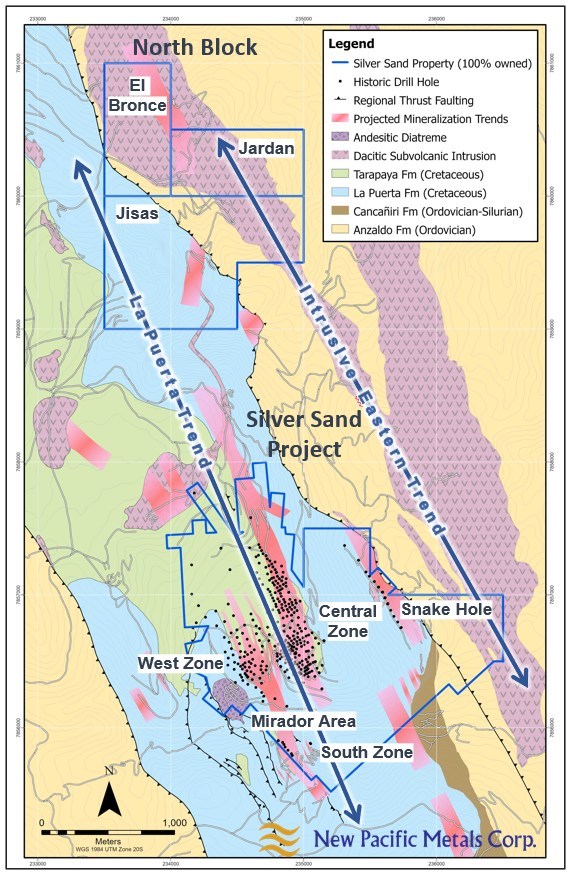
Concurrently, the company also plans to carry out certain technical, geotechnical and hydrogeological drilling required for a feasibility study.
____________________