HOUSTON, TEXAS (Ofelia Paredes, Energy Analytics Institute, 10.Nov.2026, Words: 336) — The journey of jet fuel passes through refineries, transportation systems, storage terminals, and dispatch operations before reaching an aircraft.
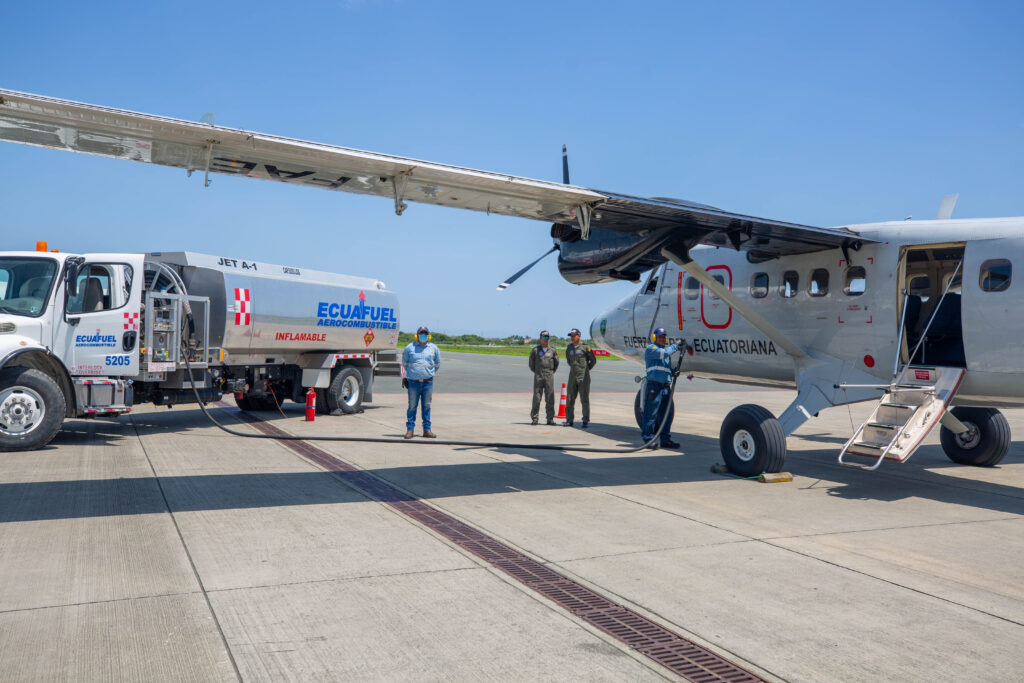
And, the national government, through EP Petroecuador, said it continues to support the supply of fuel for the Andean country’s air transport.
ALSO READ: PDVSA AND EXXON INK MOU IN CARACAS
Between 1 Jan. 2026 and 31 Oct. 2026, the state-owned company dispatched 112,490,267 gallons of aviation fuel from the Beaterio (Pichincha) and Pascuales (Guayas) terminals.
This, through an operation that integrates production, import, storage, and transportation, Petroecuador said on 10 Nov. 2026 in an official statement.
“The scale of this operation reflects Petroecuador’s contribution to the functioning of the national and international air transport system and demonstrates the state-owned company’s operational and logistical capacity to guarantee a continuous, safe, and timely supply, thus contributing to the country’s development,” the company said.
ALSO READ: EP PETROECUADOR EYES LNG IMPORTS TO MEET DEMAND [PDF DOWNLOAD]
Jet fuel journey
Although refueling an aircraft may take only a few minutes, the journey jet fuel takes before reaching an airport apron involves a process that spans hundreds of kilometers and requires the coordination of strategic infrastructure, transportation systems, and specialized personnel, according Petroecuador.
The primary source of Jet A1 fuel is domestic production at Petroecuador’s refineries, supplemented by scheduled imports that ensure a continuous supply.
Once received, the product is stored and transported using the state-owned company’s infrastructure to the distribution terminals located in Pichincha and Guayas provinces.
From the distribution terminals, the jet fuel continues its journey to airports via tanker trucks, adhering to international specifications to guarantee quality through strict technical controls essential to meeting the standards required by the international aviation industry.
ALSO READ: COLOMBIA PRIORITIZES REACTIVATION OF THE ANTONIO RICAURTE GAS PIPELINE
When the fuel arrives at the airport facilities, a new stage of the process begins; there, it is stored and distributed under specific conditions and subsequently transferred to aircraft using specialized equipment that ensures efficient and safe operation before each flight, according to Petroecuador.
____________________
By Ofelia Paredes reporting from Houston. © 1999-2026 Energy Analytics Institute (EAI) and its 100% owned Venezuelan affiliate Editores Latin Petroleum CA. All Rights Reserved.

