HOUSTON/MELBOURNE (By Reuters, By Curtis Williams and Helen Clark, 30.Apr.2026, Words: 624) — Australia’s Woodside Energy is struggling to sell liquefied natural gas volumes from its planned Louisiana LNG export facility because it is seeking liquefaction fees above prevailing U.S. market rates, two people familiar with the matter told Reuters.
The Australian energy producer has so far announced only one long-term sales and purchase agreement for the project, a deal with Germany’s Uniper covering up to 2 million metric tons per year. That is equivalent to about 25% of Woodside’s share of the plant’s output, outside of the 8 million tons of LNG it has decided to keep for its own portfolio.
RELATED: CHEVRON’S VENEZUELA PIVOT; DOUBLING DOWN ON HEAVY OIL, DEFERRING GAS
Liquefaction fees are charged by producers on top of the base energy price to turn natural gas to liquid for transport. They have been rising amid labor shortages, increasing construction costs, and strong demand that’s been further boosted by the ongoing Iran conflict, but the resistance Woodside is facing could signal a ceiling on what buyers are willing to pay for U.S. LNG.
“The problem Woodside has is the price of its liquefaction fees, which are above what others in the U.S. are charging,” one of the sources said.
RELATED: VENEZUELA REACTIVATES 2 VITAL ENERGY PROJECTS: PLANTA CENTRO AND JOSEFA CAMEJO
According to that person, Woodside initially sought liquefaction fees above $2.80 per million British thermal units, compared with broader U.S. market rates of around $2.40 to $2.50 per mmBtu. Cheniere Energy – the largest U.S. producer – charges slightly higher fees around $2.60, while Venture Global is among the lowest at about $2.30, the source said.
Another source familiar with pricing discussions said Woodside’s offering has been attractive in some respects, including contract duration, but that pricing has proven to be a sticking point.
“Woodside is offering 10-year contracts, which are attractive in terms of duration, but the sticking point has been the price,” the source said. “They wanted $2.80 per mmBtu but are now offering it at $2.60.”
WOODSIDE HAS REPORTED STRONG CUSTOMER INTEREST
Woodside declined to comment. However, speaking at a press conference after Woodside’s annual general meeting last week, CEO Liz Westcott said customer interest remained strong and that the company was comfortable with progress at Louisiana LNG.
“Many customers are seeing the benefit of being geographically diversified, and we are very comfortable with how the process is going in Louisiana LNG,” Westcott said.
RELATED: CANADA’S PM MARK CARNEY SPEAKS WITH CLAUDIA SHEINBAUM PARDO
“We continue to be well priced in the market. We were in the next wave of LNG projects, and we are one of the lower-cost LNG suppliers,” she added.
The Louisiana LNG venture has formed part of Woodside’s expansion strategy into North America, betting on a pro-fossil-fuel administration in the U.S. and growing global demand for gas.
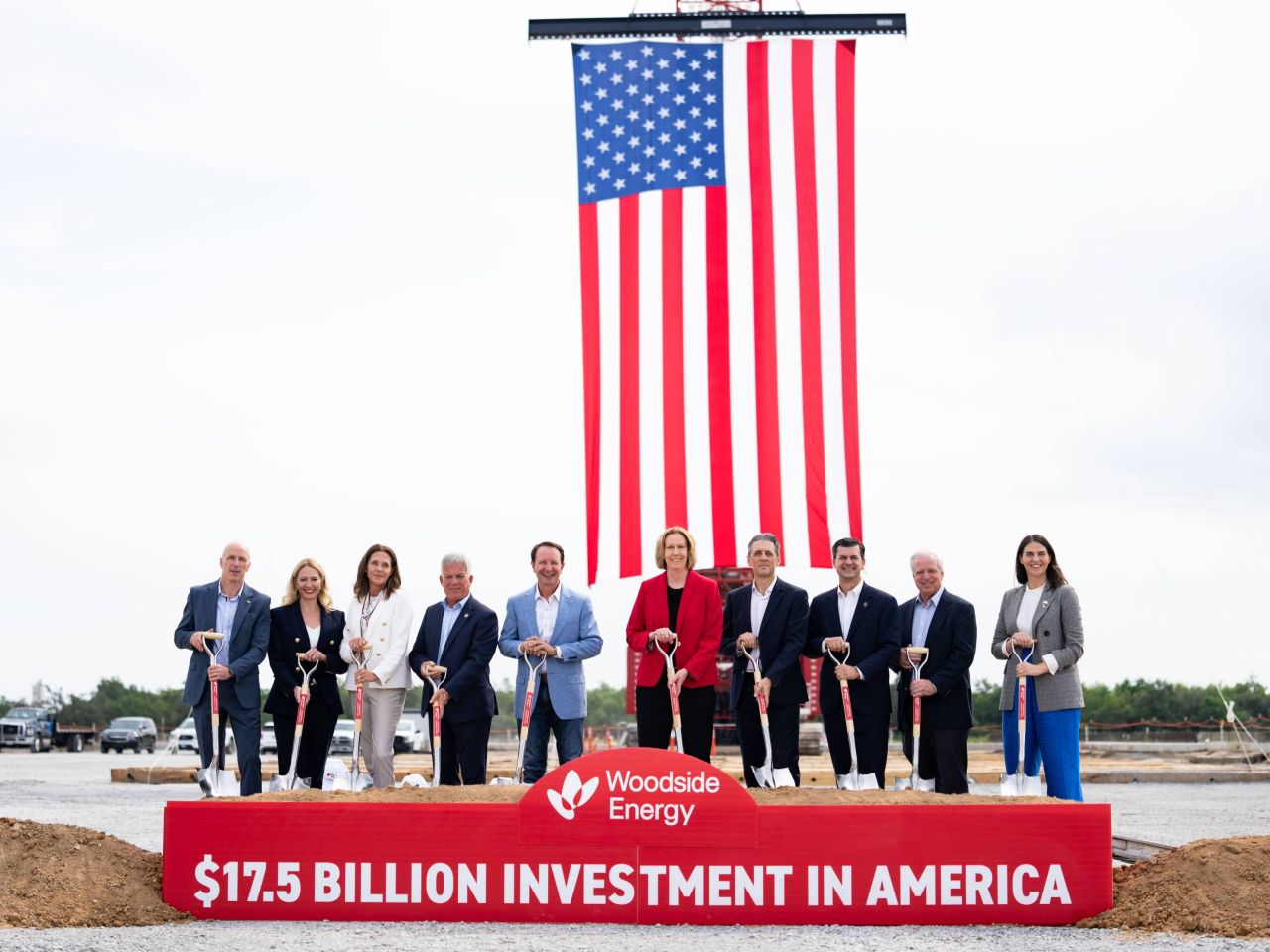
Phase 1 of the project is expected to cost about $17.5 billion. Woodside has sold 40% of the facility to U.S. investment firm Stonepeak, with U.S.-based energy infrastructure firm Williams taking a further 10%.
The first phase of the project involves building a three-train, or processing unit, facility with total capacity of 16.5 mtpa. Woodside has sold down 50% of the plant, and has said it will keep just over 8 mtpa of LNG for itself while offering the next 8.5 to market through long-term contracts.
RELATED: BP INKS MOU TO BOOST GAS PRODUCTION OFFSHORE VENEZUELA
Woodside’s supply deal with Uniper will see the German firm take 1 mtpa of LNG from Louisiana for 13 years as well as up to an additional 1 mtpa from its global portfolio. Deliveries are expected to start in 2030, when Louisiana LNG is scheduled to be commissioned.
Last month at CERAWeek, Mike Smith, the CEO of Freeport LNG, complained that liquefaction fees were too low and the company will not build new capacity with prices below $3 per mmBtu.
____________________
Reporting by Curtis Williams in Houston; Editing by Nathan Crooks and Nick Zieminski