NEW YORK, NEW YORK (By The New York Times, Sam Sifton, 3.Dec.2025, Words: 692) — In Venezuela, President Nicolás Maduro is trying to avoid the long arm of the United States, according to The New York Times Morning edition of 3 Dec. 2025.
Fast dancing
In response to threats from the Trump administration, Maduro has tightened his security, my colleague Anatoly Kurmanaev reports. He hopes to escape a precision strike or a special-forces raid.
He changes where he sleeps and what cellphones he uses. He has expanded the use of Cuban bodyguards in his personal security detail because he believes they are more loyal and less likely to betray him. He has also attached more Cuban counterintelligence officers to Venezuela’s military, according to multiple people close to the Venezuelan government. (They asked Anatoly not to use their names because they were worried about Maduro’s reprisals.)
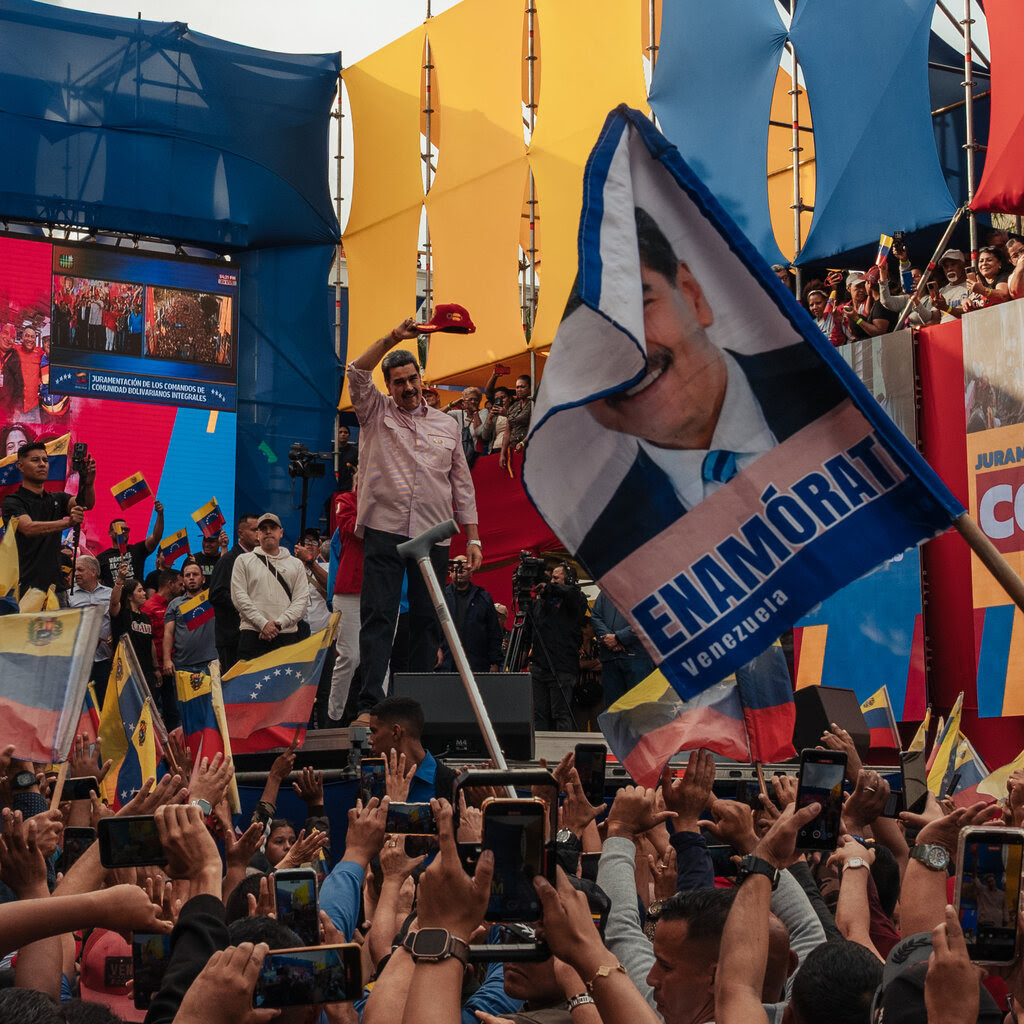
At the same time, Maduro has put on a public display of nonchalance in Venezuela, addressing the public frequently (if often in recordings), showing up at public events (if often unannounced), dancing and posting propaganda clips on TikTok.
“It’s comfort for his supporters,” Anatoly told me on the phone yesterday, “and defiance to his opponents. He’s a good dancer.”
The Trump administration says that Maduro is running a “narcoterrorist” cartel that is flooding the United States with drugs. But Venezuela does not produce fentanyl, which is responsible for two-thirds of American overdose deaths. And the cocaine that moves through his country likely accounts for less than 10 percent of the total that enters the United States.
What the administration is looking for, current and former officials in Washington say, is regime change. To hasten it, Trump has moved warships and troops into the region, while also indicating that he might be open to a diplomatic solution. He and Maduro spoke by phone last month to talk about a possible meeting. (There are no current plans for a meeting, people with knowledge of the phone call told The Times.)
On Monday, Anatoly reported, Maduro made a surprise appearance at a government rally in Caracas, the nation’s capital. “Party for as long as the body can bear it!” he told the crowd, before dancing to a fast electronic beat. A loop of his voice echoed over the speakers: “No war; peace.” There was a sniper standing guard nearby.
‘Street politics’
Maduro has been in this position before. Trump tried to unseat him during his first administration, calling for a “maximum pressure” campaign that appealed to Latino voters in Florida, a crucial state for Trump at the time. He imposed sanctions on Venezuela and recognized an opposition politician as the nation’s president.
It was to no avail. “Maduro wasn’t born yesterday,” Anatoly told me. “He’s been in power for 12 years. He’s survived his fair share of uprisings and coup plots. His message is, I’m here. I’m not scared. I’m running this place.”
Andrés Izarra, a minister under Maduro who has broken with the government and gone into exile, put it more bluntly. “He is a compulsive political operator,” he told Anatoly. “He plays by the rough rules of street politics, of corrupt union politics, rules that are similar to those of a mafia.”
All of which leaves Venezuela in a precarious position. The economy there is hurting. Close to eight million people have fled the country since Maduro took office, more than a quarter of the population. He is deeply unpopular, with an approval rating that hovers around 20 percent. But many better-off Venezuelans who have stayed are anxious. They worry that dumping Maduro is a risk. “They prefer the predictable chaos of Maduro to the unpredictable chaos of the opposition,” Anatoly said.
Yet they recognize that the country’s best chance may be a better relationship with the United States, the country’s cultural and financial north star. Anatoly quoted Porfirio Díaz then, the Mexican dictator who was toppled in 1911: Poor Mexico, so far from God, so close to the United States. The aphorism applies to Venezuela, and to its citizens, he said.
“They have to live with the United States,” he continued. “They just want to survive this round of pressure.”
____________________